The ecommerce creative playbook that worked from 2019 to 2024 is dead.
For years, the formula was simple: find UGC creators on platforms like Billo or Insense, send them your product, wait two weeks, get back 3-5 videos, upload them to Meta, and pray one of them hit. It worked well enough when ad accounts could run on 5-10 creatives per month and CPMs were still reasonable.
Then everything changed. Meta's Andromeda ranking system reshaped how ads get delivered, rewarding accounts that feed the algorithm with high volumes of diverse creative. TikTok's auction dynamics followed suit. Suddenly, the brands winning on paid social were not the ones with the single best ad -- they were the ones testing 30, 50, or 100+ unique creatives every month.
That volume requirement broke the traditional UGC model. And into that gap stepped AI-generated UGC -- a production method that has gone from "interesting experiment" to "competitive necessity" for serious ecommerce brands in under 18 months.
This guide covers everything you need to know: what AI UGC actually is, how the production process works, where it outperforms traditional content, and how to evaluate whether it is right for your brand.
What Is AI UGC?
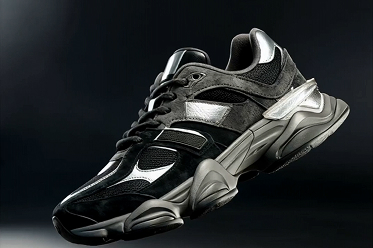
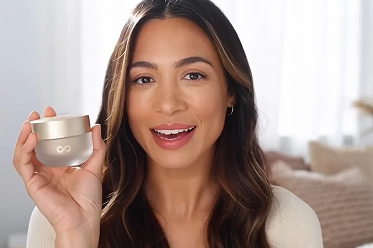
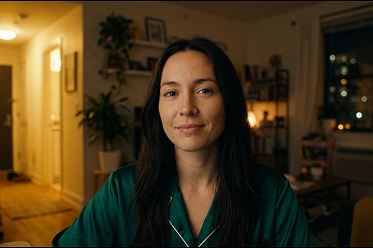
AI UGC (AI-generated user-generated content) is synthetic video and image content produced using artificial intelligence that mimics the look, feel, and authenticity of traditional user-generated content. It features AI-generated avatars -- realistic digital humans -- delivering scripted content in the informal, native style that audiences associate with organic UGC.
Unlike polished brand commercials, AI UGC is designed to look like a real person filmed it on their phone. The talking heads have natural speech patterns, realistic facial movements, and the kind of casual imperfections (slight head tilts, conversational pauses, varied lighting) that make content feel authentic in a social media feed.
The key distinction: AI UGC is not about replacing authenticity. It is about scaling the format of authenticity. The scripts, hooks, angles, and emotional triggers are still crafted by humans with deep paid media expertise. The AI handles the production bottleneck -- generating the visual and audio layer at a speed and volume that human creators simply cannot match.
What AI UGC Is Not
It is worth clarifying what does not fall under this category:
- It is not deepfakes. AI UGC uses original synthetic avatars, not replicas of real people without consent.
- It is not template video. Tools that slap stock footage behind a text overlay are not AI UGC. The defining characteristic is a realistic AI avatar delivering content as a "person."
- It is not fully autonomous. The best AI UGC still requires human strategy, scripting, quality control, and iteration. The AI accelerates production; it does not replace creative thinking.
Why Traditional UGC Is Broken for Scaling Ecommerce
Traditional UGC served ecommerce well for years. But for brands spending seriously on paid acquisition, the model has three structural problems that AI UGC directly solves.
The Volume Problem
Modern paid social algorithms reward creative diversity. Meta's recommendation engine, for instance, performs better when it has more unique ad variants to test across audience segments. The consensus among top media buyers is that accounts need a minimum of 20-30 new creatives per month to maintain performance, with high-spend accounts needing 50+.
Traditional UGC creators produce 3-5 videos per engagement. To hit 50 unique creatives, you would need to manage 10-15 creator relationships simultaneously -- each with their own timelines, revision processes, and quality inconsistencies. It is operationally unsustainable.
The Speed Problem
The typical turnaround for traditional UGC is 7-14 days from brief to delivery. For product launches, seasonal campaigns, or rapid creative testing, that timeline is a liability. By the time your creator ships the video, the window for that hook or trend may have already closed.
AI UGC production turnaround is measured in hours, not weeks. A full batch of 50+ creatives can be delivered in 5-7 days from initial brand intake, with subsequent batches on even faster cadences.
The Cost Problem
Individual UGC videos from established creators cost $300-$1,000+ per video. At 50 creatives per month, you are looking at $15,000-$50,000 in creator fees alone -- before you factor in product seeding, management overhead, and revision costs.
AI UGC delivers comparable (and often superior) creative volume at a fraction of that cost, making aggressive testing financially viable for brands that previously could not afford to produce at that scale.
The Consistency Problem
When you work with 10 different creators, you get 10 different quality levels. Some deliver polished content; others deliver footage with bad audio, poor lighting, or off-brand messaging. You cannot control the production environment, and revisions are limited -- most creators offer one round, if any.
AI content production offers consistent quality across every single creative. Lighting, audio clarity, pacing, and brand voice adherence are controlled variables, not variables left to chance.
Types of AI UGC for Ecommerce
AI UGC is not a single format. The most effective ecommerce programs use a mix of content types, each designed for different stages of the customer journey and different testing objectives.
Talking Head Videos
The workhorse of AI UGC. A realistic AI avatar speaks directly to camera, delivering a hook, a pain point, a product benefit, and a call to action. These perform exceptionally well as top-of-funnel ads on Meta and TikTok because they match the native content format users expect in their feeds.
Effective talking head AI UGC uses multiple avatar demographics to test which "person" resonates with different audience segments -- something that would require hiring dozens of creators in the traditional model.
Product Demo / Explainer Content
AI avatars walk viewers through product features, usage instructions, or before-and-after scenarios. These work well for mid-funnel retargeting, where the viewer already has awareness and needs more information to convert.
The AI production advantage here is the ability to quickly produce multiple versions emphasizing different features or benefits, then let the algorithm determine which angle resonates with which audience.
Testimonial-Style Content
AI-generated "customer" testimonials that follow the proven testimonial ad framework: the problem, the discovery, the result. These are among the highest-converting ad formats in ecommerce, and AI production allows brands to test dozens of different testimonial angles -- different pain points, different demographics, different emotional hooks -- simultaneously.
A critical note on ethics: AI testimonial content should represent real product benefits and genuine customer outcomes. The format is synthetic; the claims should not be.
Problem-Solution Ads
Short-form content that opens with a relatable pain point and positions the product as the solution. AI UGC excels here because the hook -- the first 1-3 seconds that determine whether someone stops scrolling -- can be rapidly iterated. You can test 20 different hooks on the same core message in a single production batch.
Hybrid Formats
Some of the best-performing AI UGC blends formats: a talking head intro that cuts to product footage, a testimonial that transitions into a demo, or a comparison ad that uses split-screen with an AI presenter. These hybrid creatives tend to hold attention longer and can outperform single-format ads on platforms that reward watch time.
Static and Carousel Creatives
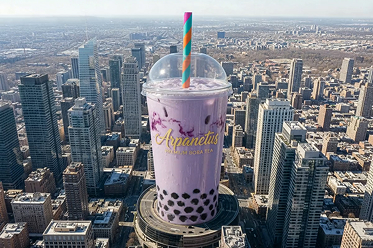
AI-generated content is not limited to video. AI-produced images featuring realistic avatars holding or using products, presented in carousel or single-image ad formats, are an increasingly important part of the creative mix -- particularly for Meta placements where static ads still perform strongly in certain verticals.
How AI UGC Production Actually Works
The production process for high-quality AI UGC is more involved than most people assume. Here is what a professional-grade workflow looks like, from intake to delivery.
Step 1: Brand and Creative Intake
Everything starts with understanding the brand. This means analyzing existing ad performance, competitor creative, brand voice documentation, audience demographics, and what angles have historically worked or failed. This strategic foundation is what separates AI UGC that converts from AI UGC that looks impressive but does not sell.
Step 2: Angle Development and Scripting
Based on the intake, the creative team develops 10-20+ unique angles for each production batch. Each angle gets a distinct hook, emotional trigger, format, and call to action. The goal is to build a structured testing matrix that gives media buyers clear variables to test -- not a random assortment of videos.
Scripts are written by humans with paid media expertise. They follow proven direct-response frameworks (problem-agitate-solve, testimonial arcs, curiosity hooks) adapted for the specific brand and audience.
Step 3: AI Production
This is where the technology comes in. Using a combination of AI avatar generation, voice synthesis, and video rendering tools, the production team generates the raw content. The best operations use proprietary pipelines that go beyond off-the-shelf tools -- custom workflows for motion control, lip-sync accuracy, and natural speech cadence.
Step 4: Human Refinement and Quality Control
This step is what separates professional AI UGC from the obvious, robotic-looking content that gives AI video a bad reputation. Every creative goes through manual review for:
- Realism check: Does it pass as human-made? Are there any uncanny valley artifacts?
- Scroll-stop test: Does the first frame and first second arrest attention in a feed?
- Brand alignment: Does the voice, tone, and messaging match the brand?
- Platform compliance: Does it meet Meta, TikTok, and Google ad policies?
Creatives that do not pass get reworked or discarded. This quality gate is non-negotiable.
Step 5: Delivery and Iteration
The final creatives are delivered in platform-ready formats with a clear naming convention that maps to the testing matrix. After the first testing cycle, performance data informs the next batch -- winning hooks get new variations, underperforming angles get replaced, and the creative strategy evolves based on real data rather than guesswork.
Results: What Conversion Lifts Brands Are Actually Seeing
The performance data on AI UGC is compelling, but it comes with a caveat: results vary significantly based on the quality of the production, the strength of the scripting, and how well the content is integrated into a broader paid media strategy.
That said, here is what the data shows across ecommerce brands that have adopted AI UGC at scale:
Creative testing velocity: Brands that move from 5-10 creatives per month to 50+ consistently report finding more winners. This is not because AI content is inherently "better" -- it is because more shots on goal means more goals. The statistical reality of paid social is that most ads fail. The winning strategy is to test more, faster.
Cost per creative: Production costs per individual creative drop by 70-90% compared to traditional UGC creator fees. For a brand spending $50,000/month on creative production, that savings can be redirected into media spend.
Ad fatigue reduction: With a constant stream of fresh creative, brands report significantly longer campaign lifespans before performance degrades. Ad fatigue -- the point where an audience has seen the same creative too many times and stops responding -- is directly correlated to creative volume. More unique creatives means each one gets shown less frequently before rotation.
Platform algorithm performance: Accounts feeding Meta and TikTok algorithms with high creative diversity tend to see lower CPMs and more efficient delivery. The algorithms reward accounts that give them more options to match the right creative to the right user at the right moment.
Conversion rate impact: Brands report 15-40% improvements in click-through rates when they move from a small set of traditional creatives to a high-volume AI UGC testing program. The lift comes from finding more winning angles, not from AI content being inherently more persuasive than human content.
AI UGC vs. Traditional UGC: An Honest Comparison
Cost per video: Traditional UGC $300-$1,000+ vs AI UGC fraction of the cost at scale
Turnaround time: Traditional 7-14 days vs AI 24-72 hours after intake
Creative volume per month: Traditional 3-5 per creator vs AI 50+ per batch
Availability: Traditional depends on creator schedules vs AI on-demand
Revisions: Traditional limited (1 round typical) vs AI rapid iteration within hours
Quality consistency: Traditional varies by creator vs AI consistent across every creative
Authentic human connection: Traditional high (real person) vs AI moderate (improving rapidly)
Real product interaction: Traditional yes (physical product) vs AI no (simulated)
The honest truth: AI UGC does not "replace" traditional UGC in every context. What it does is solve the volume, speed, and cost problem for paid acquisition creative -- which is where most ecommerce ad spend goes.
The winning approach for most brands is not either/or. It is using AI UGC for the bulk of your paid creative testing volume while reserving traditional UGC for hero content, organic social, and high-consideration purchase contexts.
When AI UGC Works (and When It Doesn't)
AI UGC is not a universal solution. Understanding where it excels and where it falls short is essential for making smart investments.
Where AI UGC Excels
- High-volume paid social testing. If you are running Meta or TikTok ads and need 30+ new creatives per month, AI UGC is built for this exact use case.
- Product launches. When you need a full creative suite ready on day one, not two weeks after launch.
- DTC brands with proven product-market fit. If your product already converts and you need more creative to scale, AI UGC removes the content bottleneck.
- Subscription brands. Ongoing retention creative -- new angles, new hooks, new reasons to stay -- produced on a consistent cadence.
- Multi-market expansion. AI UGC can be produced in multiple languages quickly, making it ideal for brands expanding internationally.
Where AI UGC Struggles
- Products that require physical demonstration. Skincare texture, food taste, fabric feel -- anything where the viewer needs to see a real human physically interacting with the product.
- Brands where creator identity matters. If your audience follows specific creators and the value is in that creator's personal endorsement, AI UGC does not provide the same signal.
- Organic social content. For Instagram feeds and TikTok profiles where followers expect to see real people, AI UGC is a poor fit.
- Highly regulated industries. Pharmaceuticals, financial services, and similar verticals with strict testimonial and endorsement regulations need careful legal review.
- Very early-stage brands. If you do not yet know your positioning, your audience, or what messages resonate, AI UGC amplifies your testing speed -- but you still need the strategic foundation first.
How to Evaluate an AI UGC Solution
If you are considering AI UGC for your brand, here is a practical framework for evaluating providers and determining whether the timing is right.
The Readiness Checklist
- Proven product-market fit. Your product converts when people see it. The bottleneck is creative volume, not product quality.
- Active paid media spend. You are running ads on Meta, TikTok, or both, and you have a media buyer who can deploy and test 30+ creatives per month.
- Clear brand positioning. You know who your customer is, what problems you solve, and what differentiates you.
- Creative performance data. Ideally, you have historical data on what hooks, angles, and formats have worked.
Five Questions to Ask Providers
- Can they show you output that passes the scroll test? Watch samples on your phone in a feed context.
- Is there a human strategy layer? Look for providers who start with angle development, scripting, and competitive analysis.
- What does the quality control process look like? Do they manually review every creative?
- How do they handle iteration? Performance data should feed back into the next cycle.
- What is the production capacity? Can they deliver 50+ unique creatives and maintain that cadence monthly?
The Bottom Line
AI UGC is not a gimmick, and it is not going away. It is a structural shift in how ecommerce brands produce creative for paid acquisition. The brands that have adopted it are not doing so because the technology is novel -- they are doing it because it solves a real operational problem: the need for more creative, faster, at a sustainable cost.
The question for ecommerce brands in 2026 is not whether AI UGC works. It is whether you can afford to keep producing content at the old pace while your competitors scale past you.
FAQ
What is AI UGC?
AI UGC (AI-generated user-generated content) is synthetic video and image content made with AI avatars that mimics the informal, authentic look of traditional user-generated content. The scripts, hooks, and angles are still crafted by humans; AI handles the production bottleneck.
Why are ecommerce brands switching to AI UGC?
Modern paid-social algorithms like Meta's Andromeda reward creative volume — accounts now need 20-50+ unique creatives a month. Traditional UGC creators deliver only 3-5 videos per engagement in 7-14 days, which is too slow, too costly, and too inconsistent to scale.
Is AI UGC the same as a deepfake?
No. AI UGC uses original synthetic avatars, not unauthorized replicas of real people. It is also not template video with stock footage — the defining feature is a realistic AI avatar delivering content as a believable person.
When does AI UGC not work well?
AI UGC struggles where genuine physical product interaction, real human emotion, or hands-on demonstration is essential. It excels at high-volume talking-head, explainer, and testimonial-style ads for top- and mid-funnel paid social.
Update history
- May 22, 2026Added a key takeaway summary, an FAQ section, and AEO metadata for clearer answers and AI-search visibility.