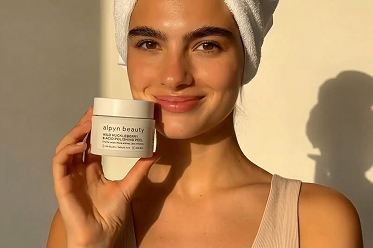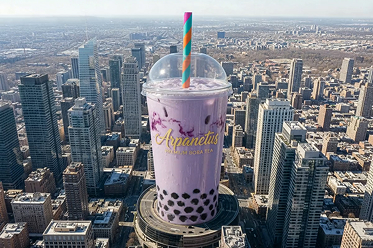
Two years ago, producing a brand film meant one thing: writing a large check. A 60-to-90-second brand video from a mid-tier production company ran $50,000 to $150,000. A premium agency spot could clear $500,000 before media spend. The timeline? Eight to twelve weeks from creative brief to final delivery, assuming no major revisions.
That model is breaking. Not because the craft of brand filmmaking has lost value, but because the tools have fundamentally changed what is possible at what price point and speed. AI-powered brand film production is compressing timelines from months to days, reducing costs by 80-90%, and -- perhaps most importantly -- making iteration affordable for the first time in brand video history.
This is not a story about replacing cinematographers with robots. It is a story about removing the barriers that have kept most 7-figure brands out of high-quality brand filmmaking entirely.
What Are AI Brand Films?
AI brand films are professionally produced brand videos that use artificial intelligence tools across one or more stages of production -- from scriptwriting and storyboarding to footage generation, voice synthesis, editing, and post-production.
Unlike traditional brand videos that rely entirely on physical shoots with crews, talent, and locations, AI brand films leverage generative AI models to create or augment visual content, synthesize realistic voiceovers, automate editing workflows, and produce cinematic-quality output at a fraction of the traditional cost and timeline.
The key distinction is that AI is a production tool, not a creative replacement. The strategy, narrative structure, brand voice, and emotional architecture still require human expertise. AI accelerates the execution layer.
The Traditional Brand Video Problem
The traditional brand video production model has three structural problems that have persisted for decades.
Cost Prohibits Iteration
A single brand film from a reputable production company costs $30,000 to $150,000 for most mid-market brands. At that price, brands get one shot. One concept. One creative direction. If the video underperforms, the budget is gone.
This is the fundamental limitation: traditional production economics force brands into a single-bet model where the cost of being wrong is catastrophic.
Timelines Kill Momentum
The average brand video production takes 6 to 12 weeks from brief to delivery. By the time the video is live, the market moment that inspired it may have passed. Product messaging may have evolved. The competitive landscape may have shifted.
The Revision Death Spiral
In traditional production, revisions are expensive. Reshoots can cost 40-60% of the original budget. This creates a dynamic where brands settle for "good enough" rather than pursuing the version that would actually perform.
The result: most 7-figure brands either overspend on a single flagship video they are afraid to change, or they avoid brand filmmaking entirely.
How AI Brand Film Production Actually Works
Phase 1: Strategic Foundation
This phase is entirely human. It involves brand auditing, audience analysis, competitive positioning, and narrative strategy. Skipping this phase is the single most common reason AI brand films fail.
Phase 2: Visual Development and Storyboarding
AI image generation tools create detailed storyboard frames that serve as the visual blueprint. AI storyboarding allows teams to explore 10-20 visual directions in the time it would take to produce two or three manually.
Phase 3: Footage Generation and Capture
For fully AI-generated films: Tools like Runway, Sora, Kling, and Pika generate video clips from text prompts or image references. The art is in prompt engineering, model selection, and generating enough raw material to edit from.
For hybrid productions: Real footage of founders, products, or locations is captured (often with minimal crew) and combined with AI-generated B-roll, environments, transitions, and visual effects. This hybrid approach often produces the most compelling results.
Phase 4: Voice and Sound Design
AI voice synthesis has reached a quality threshold where synthetic voiceover is often indistinguishable from studio-recorded narration. For brands that want the founder's own voice, AI voice cloning can create a synthetic version trained on a few minutes of sample audio.
Phase 5: Editing and Post-Production
AI editing tools handle assembly, pacing, color grading, and motion graphics. The final output goes through human quality control, brand compliance review, and format adaptation for different platforms.
Types of AI Brand Films
Brand Manifesto Films
The "why we exist" films. AI excels here because manifesto films often require sweeping, cinematic visuals that would be prohibitively expensive to shoot.
Product Story Films
Films that contextualize a product within a narrative. AI-generated environments allow brands to place their product in aspirational settings without location shoots.
Founder Story Films
The founder's personal narrative as the vehicle for brand storytelling. These work best as hybrid productions: real founder footage combined with AI-generated visual elements.
Customer Story Films
Testimonials and case studies transformed into cinematic narratives. AI enables brands to visualize the customer's journey with generated imagery.
Campaign Anthem Films
Short, punchy, high-energy films built for paid media. Instead of producing one hero video, brands can produce five to ten variations testing different hooks and narrative structures.
Quality Comparison: AI vs. Traditional Production
Where AI Matches or Exceeds Traditional
Visual ambition. AI-generated footage can achieve visual concepts that would be physically impossible or financially unreachable for most brands.
Consistency across volume. When you need 10 variations, AI maintains consistent quality across all of them.
Speed of iteration. If version one underperforms, version two can be in market within days.
Where Traditional Still Leads
Human performance. Capturing genuine human emotion and subtle microexpressions remains the domain of real cameras pointed at real people.
Physical product showcasing. If your brand film needs to show a physical product being held or used in precise detail, real footage is still superior.
Credibility-sensitive contexts. For industries where trust is paramount, audiences may respond better to visibly authentic, traditionally-produced content.
The Honest Assessment
The best AI brand films today strategically combine AI-generated elements with real footage. The hybrid approach -- real founder, real product, AI-enhanced everything else -- consistently delivers the strongest results.
Real Results and Performance Data
Cost efficiency. 70-90% cost reduction compared to equivalent traditional productions. A brand film that would have cost $50,000-$80,000 can be produced for $5,000-$15,000.
Production speed. Average timeline compression is 75-85%. Projects that took 8-12 weeks are completing in 1-3 weeks.
Engagement performance. AI brand films perform comparably to traditional brand films on key engagement metrics when the strategic foundation and storytelling are strong.
Testing velocity. Brands using AI production are testing 5-10x more creative variations than they could afford with traditional production.
The pattern: AI brand films win by making brand filmmaking a repeatable, testable, improvable process rather than a one-shot, high-stakes event.
The Founder-Led Brand Film Advantage
Why Founders on Camera Matters
In an era of declining institutional trust, people trust people more than they trust logos. Founder-led content consistently outperforms brand-led content across every meaningful metric.
How AI Removes the Founder Bottleneck
Minimal capture requirements. A founder can record 15-20 minutes of raw footage. AI handles the rest -- enhancing visual quality, color grading, and generating all supporting B-roll.
Reduced performance pressure. Casual, low-pressure recording produces more natural, authentic footage.
Digital clone capability. AI voice and visual cloning allows brands to produce founder-narrated content without requiring the founder's presence for every piece.
Evaluation Framework: Is Your Brand Ready?
Strong Fit Indicators
- You have clear brand positioning. AI accelerates production, but it cannot manufacture brand strategy.
- You need volume and variation. The more video you need, the stronger the case for AI.
- Your founder is a brand asset. AI brand films solve the production bottleneck for founder-led content.
- You move fast. Traditional production timelines are a liability for fast-moving brands.
Proceed with Caution
- Heavily regulated industries. AI-generated imagery introduces compliance complexity.
- Physical product precision. Plan for a hybrid approach.
- Brand heritage positioning. The use of AI needs to be strategically considered.
The Decision Framework
- Do we have a story worth telling? If yes, AI can help you tell it faster and more affordably.
- Do we need one perfect video or an ongoing content engine? If an ongoing engine, AI is the better path.
- Is speed-to-market a competitive advantage? If yes, AI brand film production is infrastructure, not a nice-to-have.
Where This Is Heading
The brands that will benefit most are not the ones waiting for the technology to be perfect. They are the ones building the muscle now -- learning what works, developing AI-native creative workflows, and accumulating the data that turns brand filmmaking from an art into a system.
The shift from $50,000 productions to AI-powered brand films is not a downgrade. It is a format change. And like every format change in media history, the winners will be the ones who adapted early and adapted well.
FAQ
What is an AI brand film?
An AI brand film is a professionally produced brand video that uses AI across one or more production stages — scriptwriting, storyboarding, footage generation, voice synthesis, and editing. AI is a production tool that accelerates execution; the strategy, narrative, and brand voice still require human expertise.
How much cheaper are AI brand films than traditional production?
AI brand film production reduces costs by 80-90% versus traditional shoots that ran $50,000-$150,000, and compresses timelines from 6-12 weeks down to days.
Where does AI brand film production still need humans?
The strategic foundation — brand auditing, positioning, and narrative strategy — is entirely human, and skipping it is the most common reason AI brand films fail. Genuine human performance and precise physical-product showcasing also still favor traditional footage.
What types of AI brand films can you make?
Five common types: brand manifesto films, product story films, founder story films, customer story films, and campaign anthem films — the last lets brands test 5-10 variations instead of betting on one hero video.
Update history
- May 22, 2026Added a key takeaway summary, an FAQ section, and AEO metadata for clearer answers and AI-search visibility.